lera Era Pickleball pickleball classes: Proven Curriculum for Growth
When I first started coaching pickleball in a midwestern gym with uneven floors and a stubbornly loud ceiling fan, I learned a truth that would shape every class I built afterward. People don’t just want to learn the rules of the game; they want to understand their own bodies moving in rhythm with the paddle, the ball tracking a line through air, and a sense that the effort they invest today makes yesterday’s frustrations fade. Era Pickleball pickleball classes emerged from that insight, a structured yet flexible framework designed to help players grow intentionally. What follows is not a sales brochure but a map drawn from years of in-the-trenches teaching, trial, and reflection.
The core idea behind the Era Pickleball approach is simple in theory and demanding in practice: provide a proven curriculum that scales with skill, prioritizes repeatable habits, and respects the realities of real courts and real players. The curriculum is not a glittering set of never-challenging drills. It’s a living system, updated as players move from casual weekend warriors to confident competitors, from nervous beginners to grounded strategists who can adjust on the fly when the score is tight and the gym floor stubbornly resists their movement.
In practical terms, Era Pickleball pickleball classes are designed to be accessible to a wide range of participants while maintaining a clear path to improvement. The class structure pulls from a blend of motor learning science, sport-specific technique, and the messy, unpredictable dynamics that happen when a group of people with varying heights, weights, and prior athletic experiences share the court. The end result is a program that feels both professional and personal, rigorous yet humane, demanding without crushing. It’s a curriculum built to endure the inevitable changes that accompany growth—new shoes, new grips, new strategies, and the fatigue of a longer season.
If you’re reading this because you’re considering enrolling in era pickleball classes or because you’re curious about how the system actually works, the short version is this: the curriculum is designed to train the whole player, not just the parts that look flashy in a highlight reel. You’ll improve your consistency, your court awareness, and your ability to adapt during matches. You’ll also learn how to train outside class so the gains stick long after the final rally of the day. The long version—what follows—dives into the moving parts: the progression, the teaching philosophy, the practical trade-offs, and the real-world outcomes you can expect from a committed course of study.
A clear place to start is the structure that supports growth while remaining flexible enough to honor individual differences. The Era Pickleball classes I’ve helped develop lean on three pillars: technique, decision making, and resilience. Technique covers the mechanics of strokes, footwork, and positioning. Decision making focuses on shot selection, third shot strategy, and the ability to read opponents’ intentions. Resilience is about staying present under pressure, managing fatigue, and recovering quickly between points. The interplay among these pillars is what turns a basic rally into a strategic exchange and a friendly practice into a competitive match.
The practical reality is that no two players learn in exactly the same way, and no two classes unfold with identical energy. One evening, you might watch a small group find flow as they synchronize their backhand slices with a low, skimming ball that barely clears the net. Another night, the same group could be wrestling with serve receive under fatigue, the floor creaking a little louder as players stretch for the last balls of a long drill. The curriculum is designed to accommodate those shifts. It offers a steady drumbeat of repeatable habits—things players can rely on when fatigue and doubt creep in—while leaving room for adaptation based on who shows up, what they bring, and what the day demands.
The class format is built to feel like a collaborative craft session rather than a rigid regiment. Players are treated as apprentices in a sport that rewards precision and patience in roughly equal measure. While there is a clear arc in the progression from beginner to advanced levels, there is also room for a player to linger in a certain skill set if that’s where their growth needs the most attention at a given time. The instructor’s job is to balance accountability with encouragement, to recognize when a player is forcing speed and when a coach should slow the tempo to reinforce a better foundation. It’s a constant negotiation between pushing for progress and protecting joints, tendons, and enthusiasm.
The curriculum does not pretend to be a magic wand. It is a toolset designed to deliver reliable, measurable progress while acknowledging that real life intrudes, and that some weeks will feel smoother than others. For some participants, the aim is to become more confident in doubles coordination, for others it is learning to read the court with greater acuity, or to execute a dependable third shot drop in a crowded kitchen. The range of goals is wide, but the thread holding it together is consistent: deliberate practice anchored by practical feedback.
The learning path begins with a candid inventory of where you stand. In the first sessions, players are guided through baseline tests that are practical and nonthreatening. These tests are not designed to rank you against others but to reveal patterns that matter for your own development. Are you struggling with footwork when moving laterally, or do you find your balance compromised by a run of aggressive serves from the baseline? Do you hesitate at the net when a ball comes at hip height, or do you recover quickly after a miscue? Answers to these questions shape the subsequent drills and the cadence of coaching cues.
From there, the curriculum unfolds through a series of tightly integrated blocks. Each block centers on a skill set but also threads in related areas so the learning feels cohesive rather than fragmented. For instance, a block on the forehand drive will also reflect on stance, grip, and shoulder rotation, because a clean shot cannot be divorced from the posture the body takes the moment the paddle meets the ball. Yet the block purposefully includes tactical elements like how to position for a drive in a rally that has moved to the sideline, or how to choose an aggressive shot when the opponent is under pressure at the baseline. The aim is to create a training environment where technical improvement and match sense grow together rather than in isolation.
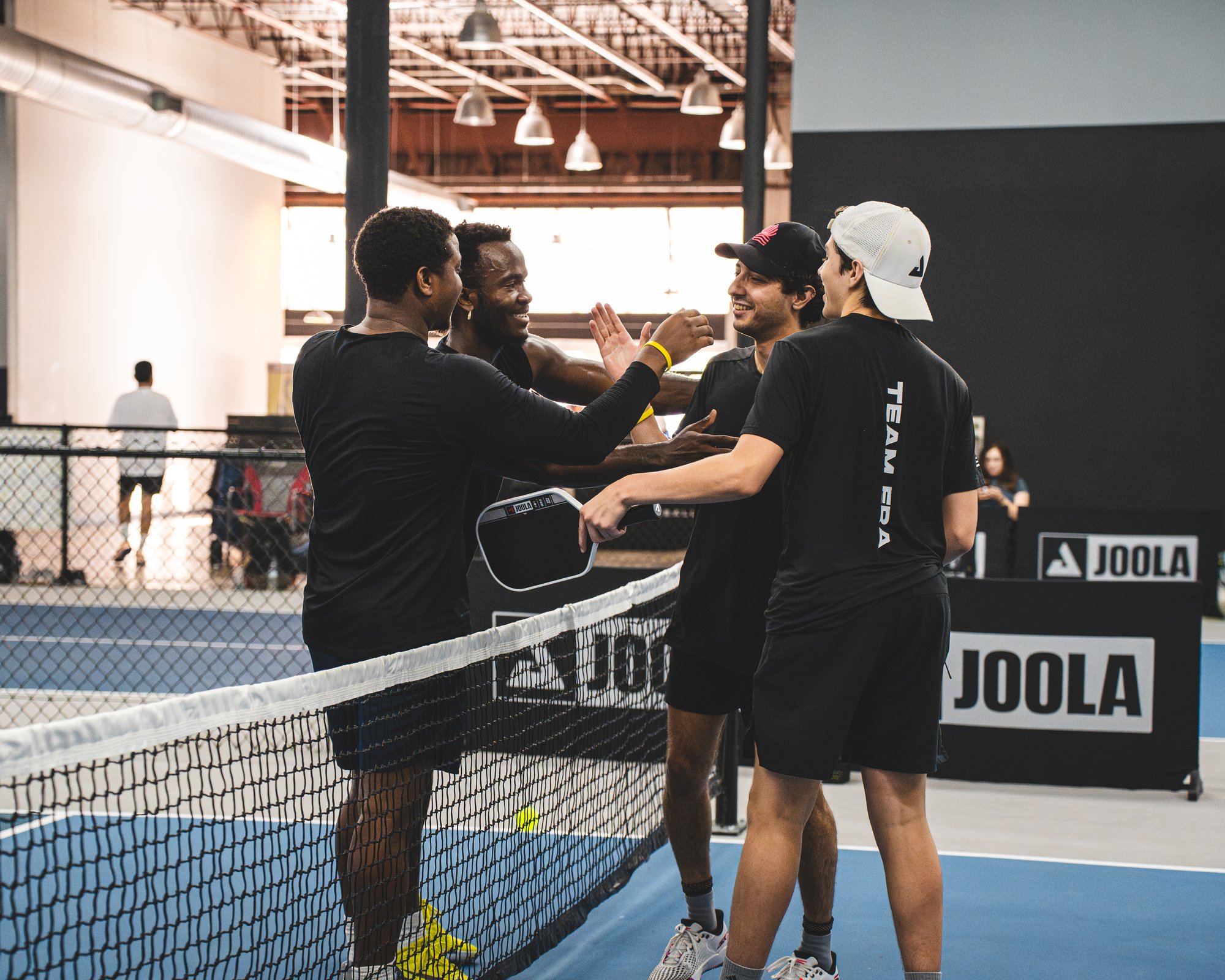
In real terms, the Covey of small wins—consistency on the midcourt exchanges, a more reliable third shot drop, better handling of spins—accumulates into a noticeable lift in performance over a season. The change is rarely dramatic in a single session. It’s the cumulative effect of weeks where you break a long plateau, then another, and another. The glow of a single perfect rally is satisfying, but the deeper satisfaction comes from noticing your body moving more efficiently under fatigue, your decisions becoming quicker and more grounded, and your confidence rising as a result.
To make this practical, the Era Pickleball pickup method emphasizes feedback loops. After drills, players receive constructive, specific notes rather than vague compliments or generic critiques. The coach points to a moment on the court, a line on the ball’s trajectory, or a fraction of a second in timing that can alter the entire outcome of a rally. The feedback is then translated into a plan for the next session. A well-structured cycle like this makes the growth feel tangible rather than theoretical, and it helps players see the direct link between daily practice and competitive performance.
If you’re curious about how the teaching happens in real life, think about a typical class that covers a single theme but uses multiple formats to reinforce learning. There might be a short on-court demonstration, followed by partner practice, then a sequence of controlled drills, each designed to stack small technical gains on top of one another. A portion of the class could be devoted to guided matchplay where players apply the new skill under pressure with the court’s noise, the scoreboard, and the clock as a constant reality check. The result is a learning environment that feels rigorous, purposeful, and human.
The design of Era Pickleball pickleball classes recognizes the reality that people come to the sport with different levels of athletic readiness. Some players carry a background in racquet sports, others have only a casual exercise history, and a few are returning after a long break. The curriculum offers modularity to accommodate these differences. It allows a player who is rebuilding shoulder stability to slow down a bit in the early weeks, while a more experienced player can press ahead with advanced transition movements or more aggressive shot making in the same session. The key, again, is balance: a steady scaffold that ensures safety and progress while not erasing the particular energy each person brings to the court.
The coaching approach behind era pickleball classes is grounded in two practical commitments. First, accountability. Coaches track progress not through a single metric but through a cluster of indicators that matter on the court. These include consistency of contact, accuracy of placement, and decision speed under pressure. The second commitment is adaptability. Instruction is not dogmatic. If a drill is not landing for a given group, coaches are prepared to adjust on the fly, replacing a scripted sequence with a more intuitive activity that preserves the learning objective. This flexibility is essential given the inherent variability of people, spaces, and days of the week.
For players who worry that a structured curriculum might squeeze the joy out of the game, it is worth noting how Era Pickleball keeps the playfulness alive. The drills are designed to be repeatable while still allowing room for improvisation. A drill might establish a baseline pattern, but the moment a player reads a change in the opponent’s stance, the game opens up to tactical improvisation. The environment rewards curiosity as much as precision. And because the class is anchored in real-world match scenarios, players often leave with a practical sense of how to carry what they’ve learned into weekend games, leagues, or club play.
Across a season, the outcomes you can expect from era pickleball classes go beyond mere skill improvement. The best players often report a shift in how they view practice itself. It becomes less about chasing quick wins and more about building reliable, repeatable habits. There is a kind of quiet confidence that emerges when you know you have a toolkit you can rely on, regardless of the opponent or the situation. You become the kind of player who maintains composure in tight moments because you’ve trained to absorb pressure and respond with deliberate action rather than impulsive reaction.
One practical thread that runs through the curriculum is the emphasis on diversity of drill design. To teach a 10-year veteran of the sport or a 60-something newcomer side-by-side without alienation, you need something more than a single, standardized playlist. The Era Pickleball curriculum uses a repertoire of drill types that can be rotated to fit the crowd. You’ll see a mix of controlled partner work, rapid-fire net exchanges, and longer, more deliberate point-building sequences. The aim is to keep the cognitive load manageable while still challenging the body. Some drills emphasize precision and tempo, others test strategic thinking under time pressure. The result is a well-rounded training experience that still respects the pace each player needs to grow.
I also want to touch on a practical reality that often surfaces in pickleball coaching: risk management. The court is a forgiving space in some ways and punishing in others. Ankles, knees, wrists—these joints bear a lot of repetitive movement, quick pivots, and sometimes forced lunges. The Era Pickleball approach makes safety a design feature. Footwork progressions start slowly, with attention to alignment and core engagement. When fatigue sets in, the coaching cue shifts from optimizing technique to preserving health. It’s not glamorous, but it is essential. Growth that comes with injuries is no growth at all. The training philosophy thus respects limits while still encouraging thoughtful, incremental progress.
Another dimension worth exploring is the role of ergogenic frameworks—how we structure effort and rest to maximize learning. In smaller, more intimate classes, the pace can be tuned to match the energy in the room. There are moments for high-intensity repetition, and there are the micro-breaks that let players reset indoor pickleball courts mental focus and rehydrate. The balance is delicate; too much intensity without recovery invites form breakdowns and burnout, while too little tempo can stall the learning curve. The curriculum therefore includes explicit guidance on how to scale volume, intensity, and complexity in a way that suits the group while still driving growth for each participant.
The business side of teaching pickleball is to keep one eye on outcomes and the other on accessibility. Era pickleball classes are priced with an eye toward inclusivity—offering options for weekday and weekend slots, small-group formats that maximize hands-on coaching, and occasional open gym sessions for players to practice on their own with feedback available afterward. For many clubs and community centers, this approach creates a sustainable model: steady enrollment, consistent coach utilization, and predictable pathways for players who want to step into competitive formats without risking their enjoyment of the sport. The value proposition is clear in practice: you gain more from a structured curriculum than from a patchwork of ad hoc drills scattered across a handful of sessions.
The most meaningful proof of a curriculum’s value, however, comes from the players themselves. I have watched beginners arrive with a mixture of skepticism and curiosity. After a few weeks, they are circulating on social threads, sharing a single moment—a well-timed drop shot that changed a rally, a net kill that snapped the crowd into a cheer, or a counter-pivot that opened a lane for a winning rally. Some players who started timid at the baseline become the ones who drive rallies from the middle of the court. Others discover a taste for doubles strategy that had never occurred to them before they picked up a paddle. In every case, the growth is not just about raw skill; it is about a shift in identity as a player who can trust the process and the work they put into it.
As you consider whether Era Pickleball pickleball classes are a fit for you, a few practical considerations come into play. First, your available time matters. The curriculum is designed to be progressive, so consistency matters more than intensity. If you can attend two sessions a week for a season, you’re likely to see a smooth upward curve. If your schedule allows only occasional participation, you’ll still benefit, but the gains may accumulate more slowly. Second, your goals define your experience. If your objective is social and recreational, you’ll enjoy the camaraderie and the steady improvement. If you’re aiming for competition, you’ll appreciate the way the curriculum builds not just strokes but also the mental acuity and matchcraft you need in a tournament setting. Third, your prior experience colors how you experience the same drills. A former racquetball player may move differently from a complete beginner, and the curriculum’s flexibility helps both of you find the right path without unnecessary frustration.
To help readers who want a tangible sense of what to expect, here are five core aspects of the Era Pickleball curriculum that consistently deliver results. These are the intentional, repeatable elements that you can expect to encounter in most sessions:
- A clear progression from basic control to advanced application, with each week building on the last.
- A robust emphasis on footwork and preparation, because speed and balance unlock most technical errors.
- A deliberate integration of tactics into every practice, so drills are not abstract but connected to real rallies.
- A feedback-first coaching style that uses precise cues tied to observable moments on the court.
- A health-conscious approach that prioritizes safe movement, injury prevention, and sustainable practice habits.
Despite these strengths, no program is perfect for every player. A common limitation you’ll sometimes encounter is the mismatch between a player's personal pace of learning and the pace of the class. Some sessions move quickly because the group includes several advanced players who push the tempo. In those moments, a coach can sometimes adjust by offering parallel tracks within the same drill—an advanced lane for quicker players and a more foundational lane for beginners. The best environments balance these needs in a way that does not marginalize anyone but still preserves momentum for those who crave challenge. If you’re a new participant and the tempo feels overwhelming at first, give yourself permission to ask for a slower entry. It is a strength, not a weakness, to acknowledge your current state and request a plan that suits you.
There is also the inevitable question of continuity. A curriculum that travels with a coaching staff needs to be adaptable when instructors change. The Era Pickleball approach mitigates this risk by preserving a shared language and a common set of coaching cues that anchor the learning process even as individual voices vary. Students benefit from consistency in expectations and a coherent sense of how drills connect across sessions. Still, every coach brings their own shade of emphasis, and a good program invites that variation as an opportunity to see the same principles from different angles. That kind of exposure often deepens understanding as much as it accelerates skill development.
If you are evaluating whether to join Era Pickleball pickleball classes or to partner with erapickleball.com for coaching and training resources, consider not only the immediate benefits but the long arc. A well-constructed curriculum pays dividends in ongoing engagement, reduced injury risk, and a rising confidence that extends beyond the court. The social dimension—meeting people who share a commitment to steady, thoughtful improvement—adds another layer of value. The sport becomes less about chasing a single shot and more about cultivating a habit of practice that serves you across activities and seasons.
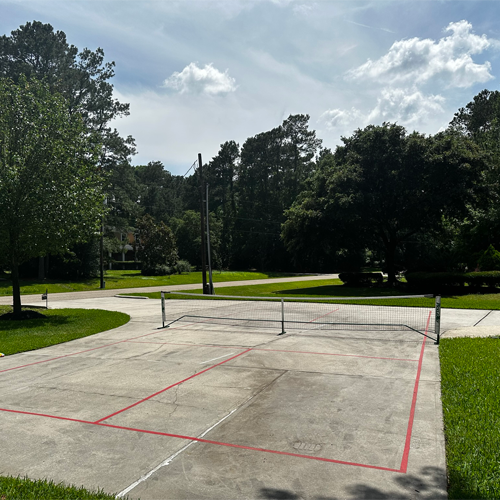
From the vantage point of someone who has spent years shaping players’ experiences, the most satisfying outcomes arise when players internalize the curriculum’s logic. They learn to ask themselves questions like: What does a good third shot look like under pressure? How do I position my feet when the opponent drives the ball to my backhand? Where should I be on the court when the server strikes the ball, and how do I recover to the ready position without losing balance? The answers come with time and repetition, but the framework supplies the structure that makes those answers possible. Growth becomes less about luck and more about deliberate practice, feedback loops, and a willingness to embrace the uncomfortable parts of learning.
Now let’s step back and consider a few concrete scenarios that illustrate how the curriculum plays out on real courts. Picture a clinic where a group is practicing net play in a crowded kitchen situation. The coach begins with a demonstration, then a sequence of controlled exchanges. The players notice how the paddle angle changes as the ball comes in high versus low, how slight adjustments in stance alter reach, and how a patient approach to control allows for a confident finishing shot. A few minutes later, the same players are in a live drill where the rhythm shifts from measured control to decisive aggression. The transition is not abrupt but feels natural because the groundwork has been laid in earlier sessions. The confidence that comes from repeated success in this environment translates into more reliable performances in actual match play.
Another common scenario involves serve and return patterns. A well-designed block in the curriculum covers serve depth, trajectory, and pace, followed by a return selection that takes into account opponent tendencies and court positioning. Players practice with a partner in a way that simulates real rallies, then switch roles to ensure both serve and return facets are well understood. The learning here is twofold: you gain the technical skill to execute a consistent serve and you develop the cognitive flexibility needed to choose returns that disrupt the opponent’s rhythm. When players can replicate the pattern under pressure, it is a sign that the curriculum has successfully translated practice into performance.
Beyond the mechanics, the curriculum also addresses the emotional and strategic dimensions of the sport. The mental aspect of pickleball—how to maintain focus during extended rallies, how to stay composed when the scoreboard becomes a source of urgency, how to manage frustration after a bad point—receives attention as part of a holistic coaching approach. This emphasis is not soft edging; it is a practical recognition that performance is inseparable from psychological readiness. The best players I have coached treat emotional regulation as another skill to be practiced, just like footwork or shot selection.
Accessibility remains a central concern as the program evolves. I have seen players who worry that their age or prior injuries will keep them from enjoying pickleball to its fullest. The curriculum responds with scalable options: slower tempo lanes, individualized coaching tweaks, and longer rest intervals when necessary. In a few cases we’ve even arranged equipment modifications, such as lighter paddles or adjusted grip sizes, to make early sessions less intimidating and more sustainable. The goal is to create a welcoming path that respects the realities of every participant, especially those who may have felt sidelined by sports that demand high impact or rapid, explosive movement.
If you are part of a community considering implementing era pickleball classes, you should know that the benefits extend beyond individual players. A well-executed curriculum can energize a club’s programming, attract new members who crave structured, progressive coaching, and strengthen the overall culture around sport and health. The sense of shared purpose—working toward common goals, celebrating incremental wins, and supporting teammates through the bumps of learning—can transform a gym floor into a thriving community space. The ripple effects can include better retention, higher participation in other offerings, and a more robust sense of identity around the sport.
In closing, a thoughtful, proven curriculum can turn pickleball from a casual pastime into a sustained practice that yields tangible skill, confidence, and social connection. Era Pickleball pickleball classes offer a framework built on solid pedagogy, real-world adaptability, and a respect for the complexities of adult learning. The approach recognizes that growth is not linear and that every player brings a unique mixture of strength, hesitation, and curiosity to the court. With a structure that honors those differences while preserving a clear, ambitious trajectory, the program helps players move from simply enjoying the game to mastering the craft of playing it with intention.
If you want to explore the possibilities further, I recommend starting with a trial session or a short, structured intro course through erapickleball.com. Listen for the coach’s emphasis on fundamentals, the cadence of the drills, and the way feedback is delivered. Notice how the group dynamics feel—whether the coaching staff is attentive to individual needs while keeping the energy inclusive and focused. The right class can transform your time on the court, not by promising a miracle shot but by offering a reliable path to stronger technique, smarter decisions, and a more resilient mindset. It is, in the end, about growing a player who can show up consistently, invest in practice, and bring a calm, deliberate clarity to every rally.
Two quick reflections for readers considering the era pickleball classes route:
-
The curriculum thrives on consistency. The most meaningful progress comes from regular attendance and deliberate practice between sessions. If your calendar allows two or three sessions a week for a period of several weeks, you will notice a substantive difference in your game.
-
The growth is cumulative, not instantaneous. You will not suddenly become a world-class player after a single month. But you will accumulate small wins that compound into sustainable improvements in technique, decision making, and mental composure. Over the course of a season, the difference becomes unmistakable, and that is precisely the point of a proven curriculum.
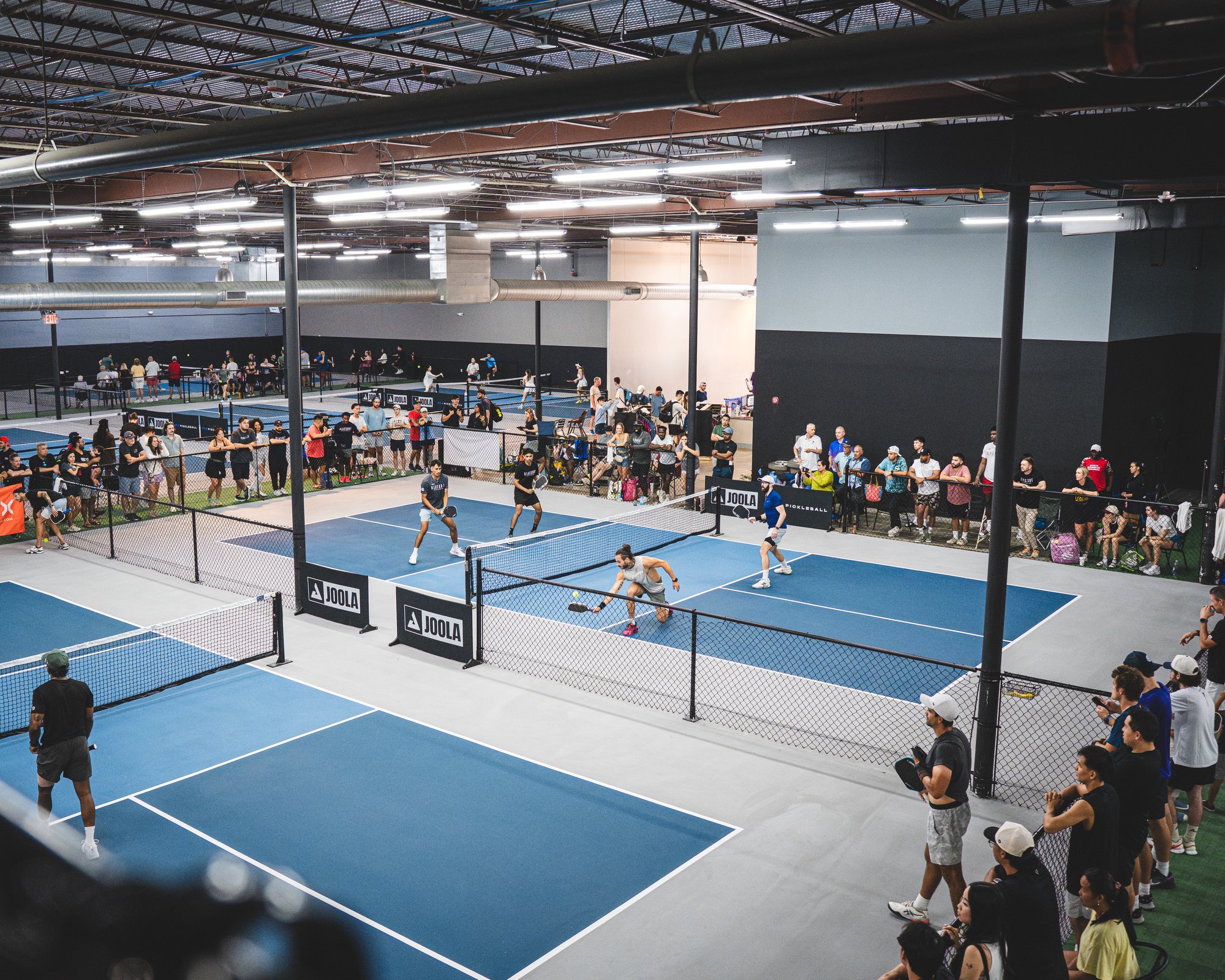
In short, Era Pickleball pickleball classes are less about cramming as many drills as possible into a single hour and more about weaving a coherent, repeatable growth fabric. The curriculum is built to travel with you, adapt to your needs, and reward your patience with tangible, meaningful progress. It is not a promise of overnight triumph, but a commitment to a durable, practical journey toward better play, sharper understanding of the game, and a richer, more satisfying court life.
If you’re ready to take the next step, the path is straightforward. Visit erapickleball.com to learn about current offerings, class schedules, and enrollment options. Reach out with questions about your current level, your goals, and any physical considerations you want the coaching staff to know. Expect a candid conversation about where you are now and what a realistic, practical route to improvement looks like. The right program will meet you wherever you stand, nudge you forward with purpose, and celebrate the steady, stepwise growth that characterizes real skill development.