pickleball coaching Era Pickleball: Strategy Sessions Explained
Strategy sessions sit at the heart of Era Pickleball. They are more than a drill or checklist; they are a disciplined process that translates court instincts into repeatable, observable outcomes. For players who want to climb levels, these sessions become a bridge between practice ethics and in-game execution. They ask a team to build a language, a shared playbook, and a quiet, relentless habit of evaluation. In the pages that follow, I’ll walk you through what makes Era Pickleball classes and coaching work in practice, how sessions are structured, and why the right questions matter more than the cleverest rally.
A good strategy session begins with a clear purpose. In many clubs and training programs, there is a natural tension between mastering technique and applying it under pressure. The most successful programs avoid letting the two drift apart. They design sessions that pair precise mechanical work with decision making under realistic constraints. At Era Pickleball, coaching teams often anchor a session around a single tactical thread—say, controlling the kitchen, or pressuring a player’s backhand attack—and then build a mini-simulation that forces players to make quick, correct choices within that frame. The result is not just improved shotmaking; it is sharper court sense, faster pattern recognition, and a sturdier mental map for the match.
From the first contact, the Era Pickleball stance balances warmth with accountability. The instruction style is not about creating clones of a coach but about cultivating adaptable athletes who can read the court with nuance. In pickleball classes provided by Era Pickleball, players encounter a deliberate blend of feedback loops. Trainers watch for how you move your feet, where your paddle meets the ball, and how you choose on instinct between aggression and preservation. They also watch for how you recover after a decision, which is often the forgotten part of smart play. Strategy sessions capture all of this in a compact arc: observe, diagnose, simulate, reflect, adjust.
Understanding the core building blocks helps when you step into a strategy session. In my experience, there are three layers that consistently align under Era Pickleball coaching.
First is structure. A session begins with a warm-up that primes balance and agility, but almost immediately moves into a game-based scenario. The structure is not random play; it is a scaffold. You’ll see patterns like “short court pressure,” “midline control,” or “ball direction bias.” Each pattern has a practical objective, a set of signals for your team, and a measurable result you can assess after a rally. The coach uses these targets to embark on a collaborative diagnostic with the players. It becomes a shared language about what good looks like in a given moment on the court.
Second is intention. Strategy is a verb, not a mood. It is about choosing a path through the shot selection jungle with consistent reasoning behind the choice. In the best Era Pickleball coaching sessions, you hear coaching questions rather than declarative instructions. Coaches ask: What did you see? What was your plan if your opponent adjusted to your position? How did your footwork support the decision you made? The aim is to cultivate a habit where players articulate their thinking, listen to feedback, and adjust in real time rather than relying on rote technique or bravado. When intention is clear, pressure becomes a signal rather than a stopper. You move toward options rather than into reflexive habits.
Third is measurement. Strategy without data is guesswork. Era Pickleball classes emphasize concrete metrics. These range from rally outcomes in a controlled drill to more nuanced indicators like time to first contact, width of your court coverage, and your conversion rate on drives from the non-volley zone. The most valuable data in strategy sessions often comes from small, replicable drills designed to press a single decision point. For example, a session might isolate the drive volley from the kitchen and track how often players keep the ball low and inside the court margins when facing a crosscourt return. The drill evolves as you improve; the coach debates whether to widen the bounce, speed up the tempo, or tighten the angle based on what the data says and how the players report their internal experience.

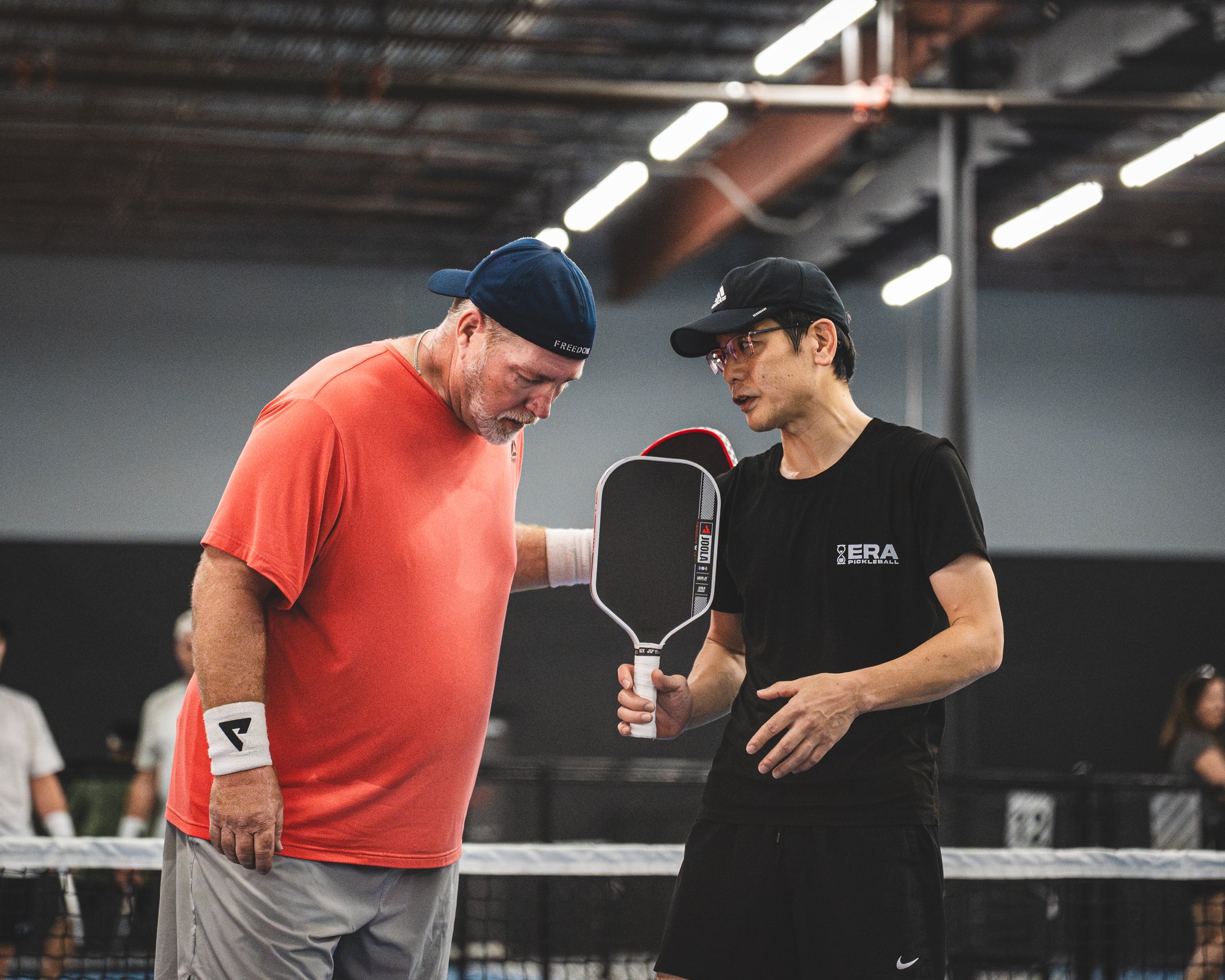
A typical Era Pickleball strategy session unfolds like a well-tuned match plan. It starts with a cooperative video review or a live demonstration, then transitions into a series of micro-scenarios that mirror match conditions. Some players prefer a slow, deliberate pace while others thrive on quick, high-intensity exchanges. The coaches adjust accordingly, but the throughline remains constant: establish a clear objective for each segment, test your decision making under realistic constraints, and harvest precise feedback to close the loop. In practical terms, this means you might begin with a focus on returning serve with depth and control, then spin the session toward challenging your opponent with mid-court drives, and finally end with a pressure period where every return must lead to a structured follow-up.
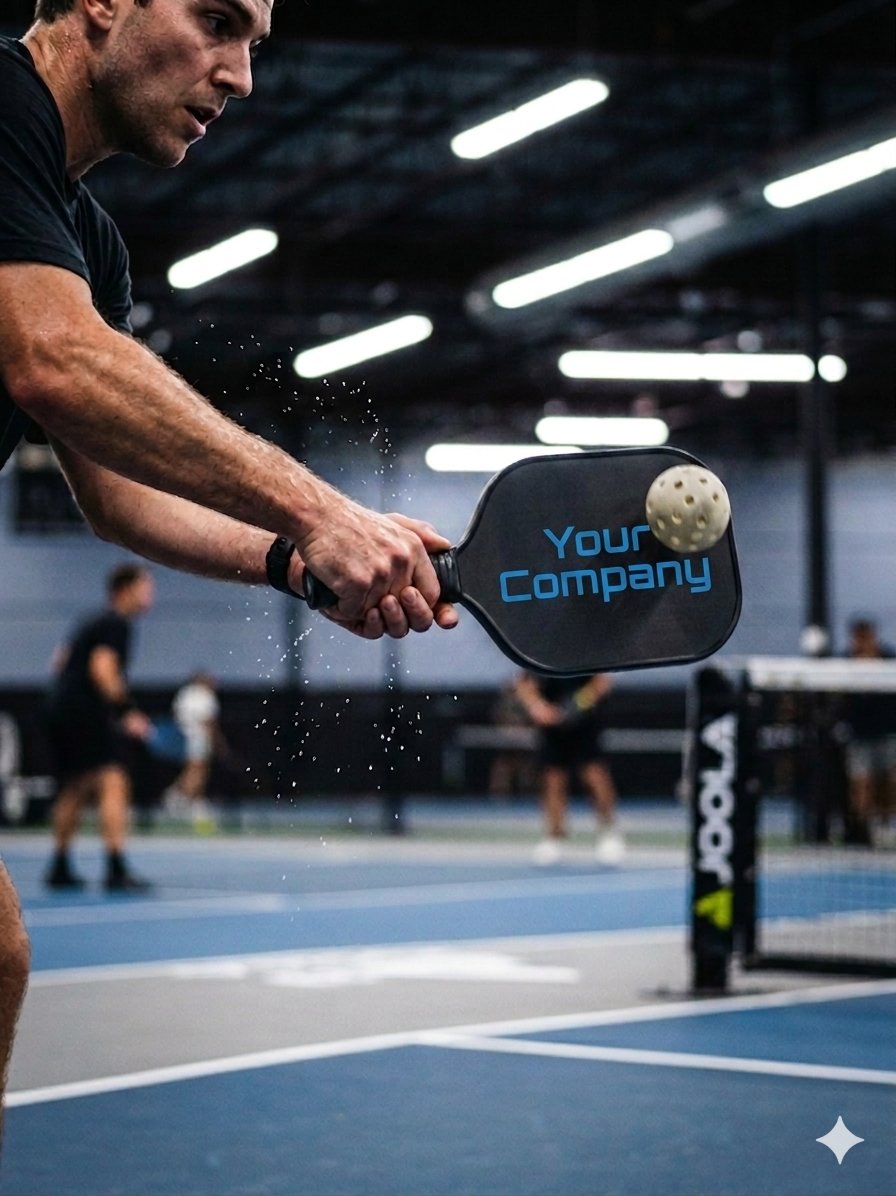
Part of the discipline in Era Pickleball coaching is maintaining a balance between technique refinement and tactical adaptation. You will still benefit from sound stroke mechanics, but you’ll see technique used strategically. The best players learn that a great backhand slice is only as valuable as the decision to use it in a situation where the opponent is likely to misread the ball. A great dink is not just a touch; it is the hinge that unlocks a more advantageous rally trajectory. Strategy sessions bring this to life by connecting the tactile feel of a shot with the cognitive framework of a point. The result is a game that feels less like a collection of techniques and more like a living plan you can adjust on the fly.
One frequent pitfall in strategy sessions is overloading players with choices. The modern pickleball court offers a spectrum of viable options at almost every moment. The risk is paralyzing the player with too many possible lines of play. Era Pickleball coaching counters this by anchoring decisions around a small, defensible set of preferred patterns. You do not need to master every possible crosscourt lob. You need to know when to lean into a high-percentage decision, when to mix in a surprise change of pace, and how to shift your energy to the next phase of the rally. The mentorship here is practical: learn the map, then navigate it with confidence rather than hunting for novelty.
Tempo matters in every strategy session. If the room feels like a marathon, something is off. The pace should rise and fall with the learning curve. Early in the season, expect longer exploratory periods where players test boundaries and learn to read signals. As weeks pass, drills become leaner, more efficient, and more precise. The coach will push you to do more with less, to compress the options into a few workable choices, and to string together points through a resilient game plan. This progression mirrors what you’ll experience on the court in real pickleball era competition: the difference between knowing what to do and being able to do it under pressure. Era Pickleball classes emphasize the cultivation of that muscle memory so the answer to a difficult rally is not a thought-heavy calculation but a practiced, almost instinctive series of actions.
For players who are newer to the sport or returning after a layoff, strategy sessions are an introduction to the concept that pickleball is a game within a game. Beyond shot accuracy, the focus shifts to how you position the court, how you manage your energy, and how you respond to your opponent’s adjustments. It is a social sport in the sense that its success relies on reading your fellow players closely, but it is also a mental sport in that the best performers maintain composure and clarity when the rally becomes crowded or chaotic. Era Pickleball coaching helps players build this dual literacy: technical fluency and tactical discernment.
As you move through more advanced phases, strategy sessions begin to incorporate opponent profiling. This is where the coaching staff borrows a page from professional training but tailors it to the pickleball court. The idea is simple: understand the styles you are most likely to encounter, and craft a flexible plan that supplies you with reliable answers. The process usually involves three steps: identify the opponent’s typical patterns, test those patterns in controlled drills, and then design a response blueprint that can adapt when the opponent shifts gears. For some players, this translates into a pre-match checklist that includes the opponent’s favored serve location, the pace of their returns, and their preferred follow-up shot. For others, it becomes a dynamic, in-game commentary that coaches provide as the match unfolds.
The learning environment created by Era Pickleball pickleball classes and coaching teams transcends the court. It is not a single event but a sequence of micro-crises that gradually shape your decision-making framework. You begin to see openings sooner, you become more confident about your plan, and you start to trust your judgment even when the rally is not going as you envisioned. This kind of growth is rarely linear. It breathes with tempo, cadence, and the level of challenge that the session presents. The best programs know that at every skill level, players crave a sense of progress. Strategy sessions are the quiet, persistent demonstration of progress—evidence that you are not simply working harder, but working smarter.
Now let us talk about the practical architecture of an Era Pickleball strategy session. There are several recurring elements that, when executed well, create a powerful learning loop.
First, clear intent. The coach opens with a precise objective for the session and then quickly ties it to a tangible target in the rally. The players hear the objective in plain terms, something like, “We want to improve our ability to finish points at the net after a deep return.” That clarity matters. It reduces ambiguity and primes the players to evaluate their performance against a known standard. The language used is not vague; it is anchored in what the team is trying to accomplish on the court.
Second, scenario design. The drills are not random. A strategy session uses a sequence of increasingly realistic scenarios. One drill may focus on neutralizing a power serve with controlled returns, another on converting a dink into a drive that opens the court, and a third on finishing points when the opponent floods the kitchen with soft shots. The progression mirrors the way a match evolves: you start with a script, you improvise within it, and you learn to reset quickly when the script does not play out.
Third, coach-player dialogue. Feedback is a two-way street. The coach provides immediate, actionable feedback, and players are encouraged to articulate their observations and questions. This dialogue cements understanding and makes the learning personal. Instead of simply copying a technique, the player internalizes a decision-making framework—what to examine, what to test, what to adjust.
Fourth, real-time adjustment. Strategy sessions incorporate brief, live adjustments during the drills. If the players are overexposed to a certain pattern or if their responses are consistently off, the coach alters the scenario on the fly. This adaptation is what separates a good session from a transformative one. The players experience the value of flexibility, the coach models the skill of reading the room, and the group remains engaged by the dynamic nature of the practice.
Fifth, reflection and integration. Every session ends with a compact synthesis. Players recount what worked, what didn’t, and what they will try in their next match. This cadence—practice, push, reflect—becomes part of the player’s broader routine. It’s not enough to execute a clever rally during one practice; you need to bring a durable pattern into the next game. Era Pickleball coaching recognizes that integration is where long-term improvement lives.
The outcomes of well-designed strategy sessions are tangible. Players report a more decisive presence at the non-volley line, a higher success rate on third-shot drops, and a calmer, more efficient transition from defense to offense. Coaches observe improved court coverage along the baseline and better anticipation of the opponent’s next move. The net effect is a measurable uplift in win probability within certain contexts—control rallies that end in a well-timed finish, rather than long exchanges that drain energy and raise stress.
A note on the scale of improvement. Strategy sessions work best when they align with the player’s broader goals. Some golfers or tennis players who cross over into pickleball have a strong sense of what precision feels like. They bring a structural mindset that translates well into Era Pickleball coaching. Others come from a more improvisational background and need a curated framework to avoid wandering in the court. In both cases, the strategy sessions are the common language that lets the group share progress, compare notes, and push each other forward.
If you are thinking about joining Era Pickleball pickleball classes or pursuing coaching, you may wonder how to prepare for a strategy session. Here are practical steps I’ve found work well in the field.
-
Do a quick self-audit. Before the first session, note a couple of recurring patterns in your game. Are you finding yourself off balance in rallies? Do you struggle to convert after a deep return? You can do this in a notebook or a simple voice memo. The goal is not to diagnose everything but to identify a couple of focal points that your coach can address efficiently.
-
Study your matches. Review recent games or practice rallies and highlight moments when your decision making felt slow or uncertain. Was there a point where you hesitated after your opponent’s shot? Was your court positioning consistent after you pressed the attack? This kind of reflection informs the initial objective of the session.
-
Arrive with openness. Strategy sessions are lean on ego but rich in feedback. Come prepared to try ideas that feel uncomfortable and to discard ones that don’t suit your style. A coach may push you toward a pattern that you have not used much before. If you give it a fair chance, you may discover you have a hidden strength in that area.
-
Bring a partner’s perspective. If possible, attend with a training partner or teammate. Two players working in tandem often get more from the discussion. You can compare notes on why certain decisions worked or failed and practice the shared vocabulary that emerges from the session.
-
Commit to a brief post-session routine. After the session, write down one or two concrete adjustments you will implement in your next practice or match. The best players create micro-habits that cement the lessons from strategy sessions into routine performance.
Era Pickleball coaching is not about chasing a single best way to play. It is about shaping a reliable approach to every point by cultivating discipline, clarity, and flexibility. The coaching philosophy is pragmatic: help players move from uncertainty to efficient decision making, from good technique to consistent application, and from isolated drills to integrated competition. The more you practice this way, the more your game starts to feel like a chess match where you not only anticipate your opponent’s moves but also control the tempo and rhythm of the match itself.
One of the enduring advantages of Era Pickleball’s approach is its scalability. Strategy sessions are designed to adapt to players of various levels. Beginners gain a coherent frame that makes sense of their early, often messy progress. They learn how to sequence their actions, how to pace a point, and how to protect themselves while experimenting with new patterns. Intermediate players acquire a more sophisticated aesthetic—an expanded toolkit that allows them to blend defense and attack, to manage risk without becoming predictable, and to create opportunities from both sides of the court. Advanced players benefit from a sharp, efficient lens for reading opponents—an ability to anticipate rotations, to exploit weak responses, and to engineer points that feel inevitable.
The role of technology in these sessions is often understated. Video analysis remains a staple, but it is used in service of understanding decisions. Coaches point to frame-by-frame changes in footwork, angles, and paddle path only to confirm or challenge the player’s own interpretation of the moment. The goal is not to build a perfect mechanical model in a vacuum, but to align the body’s response with a clear strategic intent. This is the difference between knowing how to hit a shot and knowing when to hit it.
There are edge cases worth acknowledging. In some environments, strategy sessions may need to accommodate injuries or performance anxiety. In such cases, the focus may shift toward sustainable drills that maintain progress without overloading the body or the mind. Coaches become guardians of a pace that respects the player’s current condition while still extracting meaningful gains. The same care applies to players who have to balance practice with life commitments, a reality for many serious enthusiasts. Era Pickleball coaching acknowledges this reality and designs sessions that maximize efficiency and relevance, rather than simply piling on more volume.
Another subtle factor is the social component of coaching. Strategy sessions function as a social contract among players who share a common aim. The discipline of the room matters as much as the drills themselves. When players become reliable teammates who communicate clearly, training sessions evolve from mere practice into a culture. That culture, in turn, strengthens the motivation to stick with a plan, to give honest feedback, and to acknowledge that improvement is a cumulative, not instantaneous, process.
A practical example can illuminate how these elements come together. Imagine a strategy session centered on finishing points at the net after a deep return. The coach starts with a quick demonstration of a controlled, accurate approach shot that opens the angle but keeps the ball low. Then the team runs a sequence of return drills where the ball is returned with depth and pace, forcing the net player to decide between a soft dink to the back line or a decisive volley. The scenario begins with a predictable rhythm, and then the tempo is increased to simulate a late-match pressure situation. After a few rounds, the players articulate what they saw and felt—the ball’s pace, the opponent’s positioning, and how their own body alignment either supported or hindered the desired finish. The coach notes any misalignments, proposes a small set of adjustments, and then the group repeats the exercise with the refined approach. By the end, the strategy session has converted a marginally successful shot into a consistently repeatable outcome.
Two lists capture the practical focal points that tend to surface in effective Era Pickleball strategy sessions. They are not exhaustive, but they reflect the recurring themes that coaches and players find valuable.
-
Core strategic patterns to master
-
Net navigation and pace control after a deep return
-
Mid-court pressure and transition to a winning finish
-
Dinking consistency with a purposeful mix of angles
-
Defensive coverage adjustments to reduce weak spots
-
Opponent pattern recognition and pre-emptive counterplay
-
Common adjustments you can expect in practice
-
Tightening footwork to improve balance under pressure
-
Modulating shot speed to create favorable bounce and angle
-
Selecting higher-percentage targets to sustain rallies
-
Altering the sequence of shots to disrupt opponent timing
-
Building a short, repeatable pre-point routine for nerves
The cumulative effect of these elements is a clear, practical path from concept to court-ready execution. The Era Pickleball coaching philosophy privileges the synergy between cognitive strategy and motor skill, between analysis and execution, between patient growth and decisive action. Strategy sessions are where the flip from practice to performance occurs. They are where a player translates the quiet confidence garnered in drills into the visible, measurable confidence of real matches.
In the end, what matters most is how you bring this approach into your own game. If you are contemplating enrolling in Era Pickleball pickleball training or coaching, start with the idea that strategy is not a separate construct from your physical ability. They grow together. Your best shot in a strategy session is not a clever bit of technique, but a clear, adaptable plan that you can actually implement when the pressure rises. The coaches at Era Pickleball understand this deeply. Their goal is not to produce a handful of exceptional practice shots, but to cultivate players who can read a court, execute a plan, and adjust on the fly. That is the essence of strategic play in pickleball, and it is what makes Era Pickleball classes and coaching a durable path to improvement.
To close, let me share a practical takeaway you can apply this week. When you step onto the court for a strategy-focused practice, begin with one objective you can test in a single rally. It could be, for example, “finish points at the net after a deep return 70 percent of the time.” Then run a short sequence that isolates that objective: return deep, move to the net, and finish with a controlled volley. After five to seven attempts, pause and reflect on what happened. Were your returns consistent in depth? Did your net approach open the correct angle? Did you finish with the expected confidence, or did your decision feel rushed or tentative? The goal is not perfection but disciplined inquiry. You want to know whether your plan is viable and under what conditions it holds up. If you discover the plan needs refinement, adjust your intention, reframe the drill, and test again. The cycle repeats, and with each pass you accumulate a little more certainty on the court.
Era Pickleball coaching is built around the conviction that strategy is a practice, not a doctrine. The most valuable players I have worked with embraced that truth. They treated strategy as something to grow into rather than something to master outright. They respected the time it took to translate intention into action and the discipline it required to stay curious in the face of a tough rally. Those who repeated this pattern—observe, diagnose, simulate, reflect, adjust—found that their decision making sharpened in proportion to the amount of thoughtful, repeated practice they invested in strategy sessions.
If you are curious about how Era Pickleball classes can help you, consider what outcomes you want from the game you love. Do you want to play more confidently at the end of long rallies? Are you aiming to reduce unforced errors when opponents apply pressure? Are you trying to build a sharper sense of placement, a more reliable transition, or a more consistent serve return? The coaching team will listen for those aims and translate them into a plan that feels practical and specific. They will tailor the strategy session to your current level, your injuries or limitations, and the tempo you prefer on the court. And as you grow, you will find the same thread running through every practice: a grounded, strategic approach that elevates your play without sacrificing you as a player.
The Era Pickleball approach recognizes that the sport is both art and science. The artistry is in how you move, how you pace a rally, and how you create pressure with purpose. The science is in the data you collect, the patterns you learn to read, and the mental models you develop for anticipating and overcoming resistance. Strategy sessions fuse these elements into a living curriculum that respects your individuality while guiding you toward shared standards of play. That union—technique refined by decision making, and decision making sharpened by feedback—produces players who not only win more points but understand why they win them. And that understanding is, in many ways, the quiet backbone of lasting improvement.
As you consider your next steps, remember that the value of Era Pickleball pickleball training lies not in a magical shortcut but in sustained, purposeful practice. Strategy sessions are the engine that fuels your growth, a structured yet flexible framework that helps you see, decide, and act with clarity. The court rewards players who combine not only precision but also intention and composure. This is where Era Pickleball coaching shines: in turning potential into consistent performance, one session at a time.